|
On the 8th February at the 2025 Millrose Games in New York, American Yared Nugus broke the indoor mile world record with a blistering time of 3:46.63. His team-mate, Hobbs Kessler, competing in the same event, also beat the old record (3:46.90). Remarkably, the record that was broken had stood for five years since it was set by Yomif Kejelcha in 2019.
Just five days later, Jakob Ingebrigtsen of Norway broke Nuguse’s new record with a staggering 3:45.14 (that is a 2:19.90 pace per kilometre). Ingebrigtsen also holds the 1500m indoor world record which he officially set back in 2022 – and, remarkably, unofficially beat the world record time en route to his mile mark.
This makes you wonder why, when a record is broken, is it so often beaten by someone else very soon afterwards? A classic and well-documented example was after the four-minute mile was first broken by Britain’s Roger Bannister in May 1954, John Landy broke the record 46 days later. Then a few weeks after that, Bannister narrowly beat John Landy as they both went under four minutes racing against each other.
Now, the world outdoor record currently sits at 3:43.13 by Hicham El Guerrouj. It is 16 seconds faster than Bannister’s remarkable effort – and incredibly that world's best time was set way back in 1999.
For 41 years, since the beginning of times being recorded in 1913, no-one broke the four-minute mile, and then two people break it within a few weeks of each other – and now almost 1 800 runners have dipped under what was once considered to be an “impossible” mark.
Could it be that the four-minute mile was more of a mental barrier than a physical one? Once the record was broken, it suddenly seemed less impossible to other runners and that enabled them to push beyond what they believed were their physical limits.
One could argue that the reason times have improved over the years has more to do with other factors, like improved shoe technology, advanced training methods, nutritional awareness and increased knowledge. No doubt these factors have played a huge part and explains why, in general, times continue to improve. What it doesn’t explain is why, when a record is broken, it is often broken again not long afterwards and this indicates a mental barrier. Once it has been done, it suddenly becomes achievable.
So what separates top performers from the rest? Is it grit, perseverance, dedication or ambition? Or, what Jesse Itzler, in his book “Living with a SEAL”, describes as the 40% rule?
According to Chris Myers (Forbes Oct 06, 2017), Itzler hired a navy SEAL to live with him and his family for a month to teach them mental toughness. The so-called 40% rule is when your mind tells you that you are exhausted and cannot possibly go any further, you’re actually only 40% done. The human mind can both propel us forward or hold us back. The 40% rule reminds us that no matter how exhausted we might feel, it is always possible to draw on an untapped reserve of energy, motivation, and drive that we all possess. Our performance is not defined by our ability but rather by our mindset.
This is also demonstrated by the fact that so many athletes collapse as soon as they cross the line: Surely that is your mind keeping you going until you achieve your goal.
So are the people that break boundaries those that believe Chris Myers’ family motto: “If it’s too hard for someone else, it’s just right for us”? Of that we can’t be sure, but even if you don’t have the mental toughness of a boundary breaker, there is no reason why you can’t apply the 40% rule to your athletic performance and life in general.
Too often we limit ourselves by making excuses about our abilities. If we apply the 40% rule and tell ourselves when we are completely exhausted and feel we can’t go on, that we are actually only 40% done, we might be surprised at what we can achieve.
Or maybe we just need to quote fictional football coach Ted Lasso, to “believe in our abilities" … and good luck as you break your boundaries.
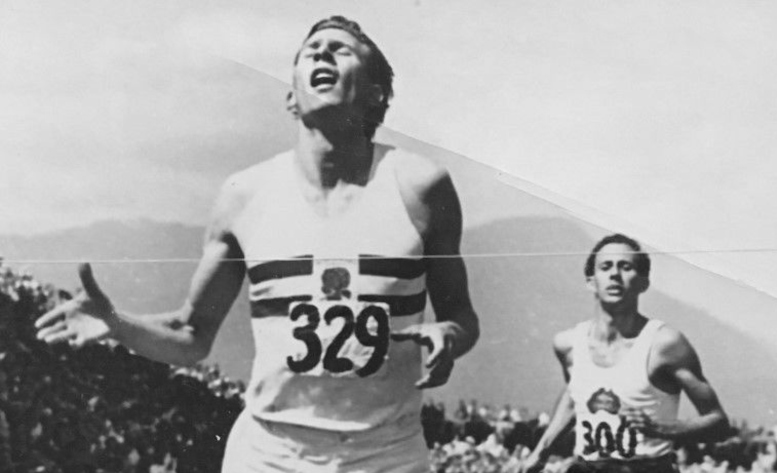
ROGER BANNISTER
|
|
As a race competitor in South Africa, you know that safety at an event is paramount.
If you have ever been lost during a trail run or mountain bike event, or are a back-marker far behind the rest of the entrants, you will know that sinking feeling when you can’t see anyone and wonder if the race organisers have any idea where you are.
You will be pleased to know that FinishTime’s Racetec Toolkit App has you covered.
Besides the outstanding timing aspect of this app, one of its key features is that it can be used to improve safety at an event by helping safety officers track the whereabouts of competitors.
At any point during the event the safety officer can get a full break down of the total number of entries, the non-starters, the DNFs, the disqualifications, and the number of competitors still out on the course – including an approximation of where they are. In this way, each entrant can be accounted for at any time.
If the situation arises that the sweeps are in and the course is clear, but the App shows there are some people still on the course, the safety officer will have access to your name and race number and can get your contact details.
And, with a chip reader at the entrance to the medical tent, the safety officer can track how many competitors are in the medical tent at any one time and who they are.
The safety feature of the Racetec Toolkit App is used by Comrades, IronMan and a host of other events to ensure your safety.
|